
THE ARCHIVE · DANCE MOGUL MAGAZINE
Legacy
The dancers and choreographers who built the culture — profiled in their own right.
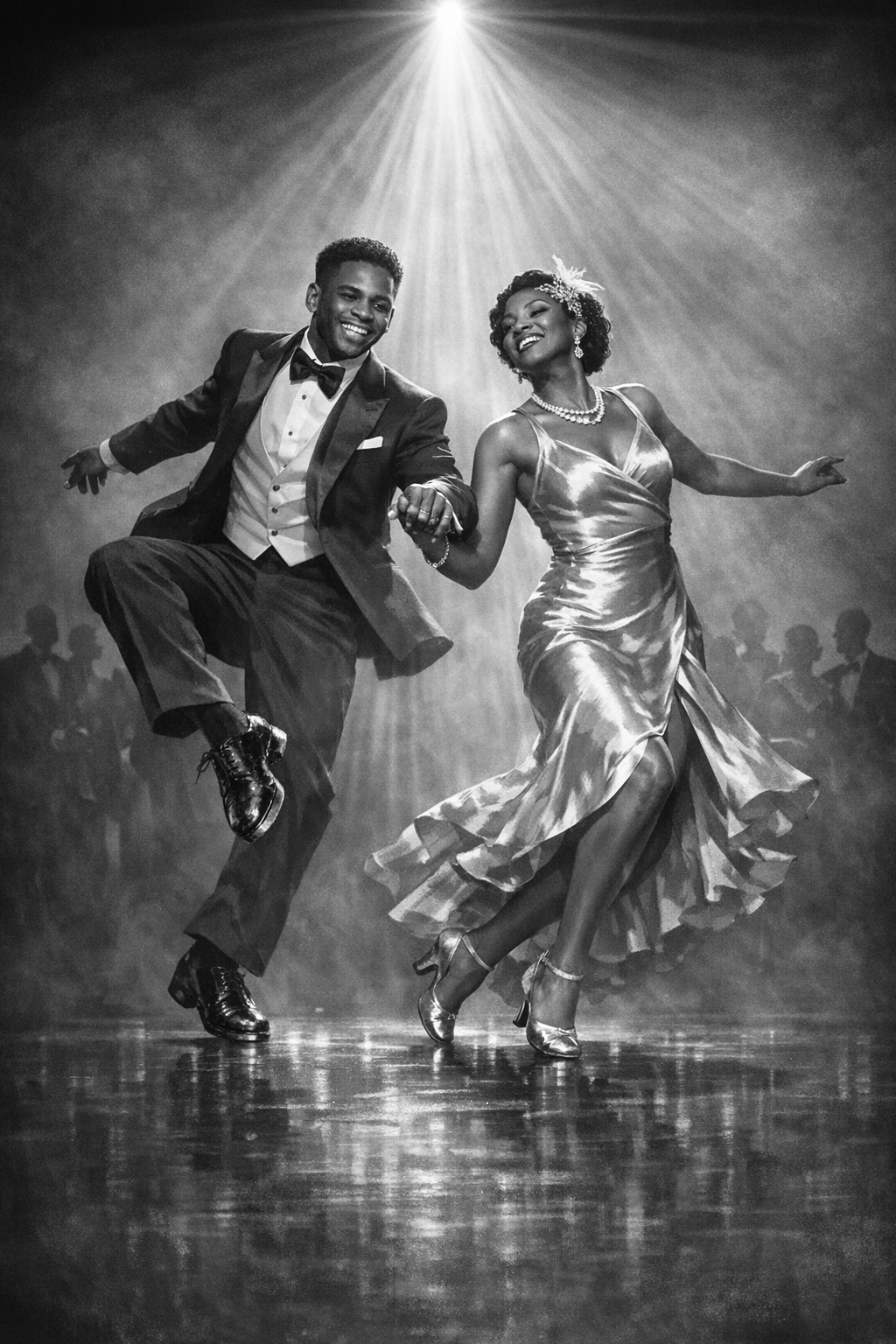
For too long, the pioneers of dance have been reduced to bullet points on someone else’s list — two sentences, a birth year, and a label. Their contributions deserve more than a footnote. They deserve full accounts of who they were, what they created, and why it mattered.
The Legacy section of Dance Mogul Magazine is an ongoing editorial project dedicated to documenting the lives and contributions of the dancers and choreographers of color who shaped every major dance form practiced today — and the collaborators who stood beside them and carried their work to the world. Each profile is a standalone article — researched, written, and published as a permanent record of their impact on the art form and the culture.
Where Dance Mogul Magazine holds original interview footage or first-person documentation with an artist, their Legacy profile includes that material. For artists we did not have the opportunity to interview, we build their profiles from historical research, community accounts, and the public record. For artists who have passed away, this work carries a particular urgency — every year that goes by without proper documentation is another year their story risks being forgotten or told incorrectly by others.
This is not a list. This is a library.
Social Dance & Ballroom
| Earl “Snakehips” Tucker | Harlem Renaissance dancer, originator of the Snakehips dance | Read → |
| Florence Mills | Comedian, dancer, and singer of the Harlem Renaissance | Read → |
| Josephine Baker | Jazz dancer, singer, activist, international icon | Read → |
| Frankie Manning | Choreographer and ambassador of the Lindy Hop | Read → |
| Norma Miller | Queen of Swing, Lindy Hop pioneer | Read → |
| The Whitman Sisters | Vaudeville circuit pioneers, highest-paid Black act of their era | Read → |
Hip-Hop & Street Dance
| Don “Campbellock” Campbell | Creator of Locking, founder of The Lockers | Read → |
| Toni Basil | Dance partner & manager to Don Campbell, staged The Lockers, coined “street dance”, choreographer for Bowie and film | Read → |
| James Brown | Godfather of Soul, precursor to hip-hop dance | Read → |
| Michael “Boogaloo Shrimp” Chambers | Breakin’ films, popping and boogaloo icon | Read → |
| Buddha Stretch | Freestyle hip-hop pioneer, bridge between old and new school | Read → |
| Henry “Link” McMillan | Elite Force co-founder (1992) and Mop Top family, hip-hop freestyle master teacher and judge in 22 countries | Read → |
| Rosie Perez | Soul Train dancer and Fly Girls choreographer, three Emmy nominations; discovered Henry Link in 1989 | Read → |
| Vin Diesel | Before Hollywood: 1980s New York breaker on the 1984 tape Breakin’ in the USA, who carried the floor into film | Read → |
| Cuba Gooding Jr. | Before Hollywood: breaker at the 1984 Los Angeles Olympics closing ceremony at 16; Paula Abdul’s end-zone dance; Billy Flynn in Chicago | Read → |
| Donnie Yen | Before Hollywood: breaking and a moonwalk in his first starring role (1984) and a hip-hop dance-off in Mismatched Couples (1985), on the way to Ip Man, John Wick and directing Caine | Read → |
| Michael DeLorenzo | Before Hollywood: Ballet Hispanico and ballet scholarships, a principal-dancer credit in Fame (1980), “Beat It” and a rival-crew dance-off in Fast Forward (1985), on the way to New York Undercover and Resurrection Blvd. | Read → |
| Massiah “Peekaboo” | Misfitss freestyle dancer, Wreckin’ Shop, Mystidious Misfitss recording artist, international teacher, includes DMM’s exclusive interview | Read → |
| Steffan “Mr. Wiggles” Clemente | Rock Steady Crew and Electric Boogaloos, popping and b-boy culture keeper, includes DMM’s exclusive interview | Read → |
| Kevin “Shock-a-Lock” Porter | New York locking pioneer, Realism and Lockism, creator of Compete to the Beat, includes DMM’s exclusive interview | Read → |
| Dave Scott | Choreographer of You Got Served and Stomp the Yard, teacher to a generation, includes DMM’s exclusive interview | Read → |
| Darrin Dewitt Henson | Choreographer of *NSYNC’s “Bye Bye Bye” (2000 MTV VMA), Darrin’s Dance Grooves, Soul Food actor and director, includes DMM’s exclusive interview | Read → |
| Billy & Bobby McClain, “The Wondertwins” | Boston street-dance duo: six-time Apollo Amateur Night winners, Bobby Brown’s 1989 tour, Jacob’s Pillow, United States Artists Fellows (2022) and Berklee Hip-Hop Hall of Fame (2025) | Read → |
| Sam “Boogaloo Sam” Solomon | Creator of Popping | Read → |
| Timothy “Poppin’ Pete” Solomon | Popping pioneer, Electric Boogaloos | Read → |
| Rennie Harris | Founder of hip-hop’s first concert touring company | Read → |
| Kangol Kid | UTFO, hip-hop music and dance pioneer | Read → |
| Ana “Lollipop” Sanchez | Breakin’ films, street dance culture | Read → |
House & Club Dance
The New York and New Jersey club dancers who turned house into a teachable form and carried it to studios, festivals and universities around the world.
| Ejoe Wilson | Four-time Apollo Amateur Night winner, Mariah Carey principal dancer, among the first house-dance teachers (1988), includes DMM’s exclusive interview | Read → |
| Caleaf “Big Leaf” Sellers | Mop Top, Dance Fusion NYC founding member, 36 Chambaz of Stylez co-founder, Harvard visiting artist, includes DMM’s exclusive interview | Read → |
| Tony “Sekou Heru” Williams | Dance Fusion NYC founding member, creator of RhythmMetrics, choreographer of Fall Out Boy’s “Dance, Dance,” includes DMM’s exclusive interview | Read → |
| Tony “Tone” McGregor | Newark house pioneer, Dance Fusion NYC, House Dance Forever finalist and Juste Debout judge, includes DMM’s exclusive interview | Read → |
Tap
| William Henry Lane “Master Juba” | Precursor to tap dance, first Black performer for white audiences | Read → |
| Bill “Bojangles” Robinson | Highest-paid Black entertainer of the early 20th century | Read → |
| John W. Bubbles | Father of rhythm tap | Read → |
| The Berry Brothers | Acrobatic tap trio, flash dance innovators | Read → |
| Pops and Louie | Albert “Pops” Whitman & Louis Williams, improvisational acrobatic tap duo and Black vaudeville innovators | Read → |
| The Nicholas Brothers | Flash dance style of tap, film and Broadway legends | Read → |
| Howard “Sandman” Sims | Apollo Theater legend, executioner of Amateur Night | Read → |
| Sammy Davis Jr. | Actor, singer, tap dancer, vaudeville to mainstream icon | Read → |
| Gregory Hines | Tap virtuoso, actor, led the tap revival of the 1980s | Read → |
| Savion Glover | Tony-winning hoofer of Bring in ’da Noise, Bring in ’da Funk, heir to the jazz tap masters, includes DMM’s exclusive interview | Read → |
| James “Jimmy Slyde” Godbolt | Master of slide-style tap, bebop improviser, National Heritage Fellow | Read → |
| Clayton “Peg Leg” Bates | One-legged tap virtuoso, 21 Ed Sullivan appearances, Cotton Club headliner | Read → |
Ballet
| Janet Collins | First Black prima ballerina at the Metropolitan Opera | Read → |
| Arthur Mitchell | Founded Dance Theatre of Harlem | Read → |
| Desmond Richardson | First Black principal dancer at American Ballet Theatre, co-founder of Complexions Contemporary Ballet | Read → |
| Raven Wilkinson | First Black dancer signed full-time to a major ballet company | Read → |
| Maria Tallchief | First Native American prima ballerina | Read → |
| Joan Myers Brown | Founded PHILADANCO and the International Association of Blacks in Dance | Read → |
| Sono Osato | Asian American ballerina, Ballets Russe and ABT | Read → |
| Judith Jamison | Alvin Ailey principal dancer and artistic director | Read → |
Modern & Contemporary
| Katherine Dunham | Creator of the Dunham technique, merged Africanist and modern styles | Read → |
| Pearl Primus | Fused African and modern dance, anthropologist and performer | Read → |
| Alvin Ailey | Founded the first racially integrated dance company in America | Read → |
| Nasha Thomas | Ailey dancer chosen by Alvin Ailey, performer of Cry, National Director of AileyCamp | Read → |
| José Limón | Creator of the Limón technique | Read → |
| Donald McKayle | Choreographer and director, works on racial injustice | Read → |
| Talley Beatty | Prolific modern dance choreographer | Read → |
| Carmen de Lavallade | Actress, choreographer, danced with major companies and on Broadway | Read → |
Jazz & Musical Theatre
| Debbie Allen | Actress, choreographer, director, founded DADA | Read → |
| Paula Abdul | Laker Girl turned Emmy-winning choreographer and pop star, the dancer behind the hits | Read → |
| Garth Fagan | Choreographer of Broadway’s The Lion King | Read → |
| Chita Rivera | First Latina Kennedy Center Honors recipient | Read → |
| Jennifer Lopez | Fly Girl turned superstar, World of Dance judge and producer, played the Chita Rivera role in Kiss of the Spider Woman | Read → |
| Dollie Henry | Jazz Theatre Pioneer · Choreographer · Educator’s London to Harlem | Read → |
Traditional & Global Dance
| “Baba” Chuck Davis | Created DanceAfrica, African American Dance Ensemble | Read → |
| Asadata Dafora | Brought authentic African dance to the United States | Read → |
| Kariamu Welsh | Founder of the Umfundalai dance technique | Read → |
| Amalia Hernandez | Founded Ballet Folklórico de México | Read → |
| Rukmini Devi | Revivalist of Bharatanatyam dance | Read → |
The Soul Train Dancers
The Legacy section of this archive documents the pioneers who built the foundation — the tap masters, the ballet trailblazers, the modern dance architects, and the street dance originators whose contributions shaped every form practiced today. But legacy is not only a matter of the past. It is also a living thing, carried forward by artists who are still here, still creating, still shaping the culture in real time.
The Soul Train dancers represent that living bridge. From 1971 to 2006, the dancers of Soul Train created entire movement vocabularies on national television — locking, waacking, popping, the robot, freestyle — that the entertainment industry has drawn from for more than fifty years. They influenced Michael Jackson, Janet Jackson, Prince, Beyoncé, Missy Elliott, and virtually every major performer who incorporates dance into their artistry.
They were the uncredited choreographers of a cultural revolution, and many of them are still active today: teaching, mentoring, judging, performing, and ensuring that the traditions they built are passed to the next generation with their history intact.
Their modern-day contributions extend far beyond nostalgia. Original Soul Train dancers serve as cultural ambassadors at universities, dance conventions, and community programs across the country. They consult on film and television productions seeking authentic period choreography. They run workshops that connect today’s social media dancers to the lineage they unknowingly continue.
Every viral dance challenge on TikTok traces its creative DNA back to the Soul Train floor — and the dancers who were there first are still working to make sure that lineage is recognized, respected, and properly credited.
Dance Mogul Magazine has compiled the definitive archive honoring one hundred of these dancers — both the legends who have passed on and the living icons who continue to shape the culture. Their full profiles, historical context, and individual contributions are documented in a dedicated section of The Archive.
PAST & PRESENT LEGENDS
To read more about the Soul Train dancers, their individual stories, and their continuing impact on dance culture, visit the full archive.
A Growing Archive
This archive documents both the pioneers who built the foundation and the living artists who carry it forward. New profiles are being researched and published on a rolling basis. The artists listed here represent the first wave — the full scope of this archive will eventually span hundreds of dancers and choreographers across every discipline, era, and geography, from the earliest legends to the modern-day icons still shaping the culture today.
If you are a dance historian, educator, family member, or community member with direct knowledge of any of the artists listed above and would like to contribute information, photographs, or firsthand accounts, we welcome your participation.
Dance Mogul Magazine believes that the people who built the culture should be documented by the people who live in it — past and present.
Email | dancemogulmagazine@gmail.com
Cite Us | How to Cite Dance Mogul Magazine
© 2026 Dance Mogul Magazine LLC · All Rights Reserved
“Inspiring Self-Empowerment Through Dance Culture”
Black-Owned · Est. 2010